Think Better! Think bigger! Think Faster!

We are born with the most brain cells we will ever have. As we age, many of our neurons die. However there is recent documentation that in certain parts of the brain, new neurons may develop.
The real story of our extraordinary Cognitive abilities is about Connections...how nerves connect with each other.
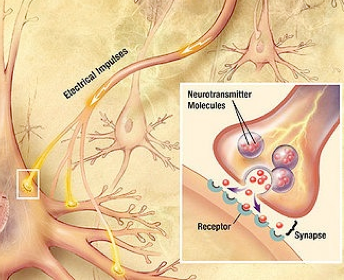
A 3 year old child has about 2 times the neural interconnections, synapses, as an adult. The reduction (pruning) of synaptic connections is essential for us to function effectively in the world.
As a child develops new skills such as movement, language, and concept development; their brains are undergoing synaptic pruning, getting rid of extra connections, creating order out of chaotic interconnections.
At the same time our synaptic connections are being pruned, some connections are strengthened and given priority over others.
This is one of the essential components of Attention, Learning, Memory & Cognition...neural inter-connections and plasticity, the number and strength of synaptic connections.

From Wikipedia:
The adult brain is not "hard-wired" with fixed and immutable neuronal circuits. There are many instances of cortical and subcortical rewiring of neuronal circuits in response to training as well as in response to injury. There is solid evidence that neurogenesis (birth of brain cells) occurs in the adult, mammalian brain—and such changes can persist well into old age.[2] The evidence for neurogenesis is mainly restricted to the hippocampus and olfactory bulb, but current research has revealed that other parts of the brain, including the cerebellum, may be involved as well.[4]
In the rest of the brain, neurons can die, but they cannot be created. However, there is now ample evidence for the active, experience-dependent re-organization of the synaptic networks of the brain involving multiple inter-related structures including the cerebral cortex. The specific details of how this process occurs at the molecular and ultrastructural levels are topics of active neuroscience research. The manner in which experience can influence the synaptic organization of the brain is also the basis for a number of theories of brain function including the general theory of mind and epistemology referred to as Neural Darwinism and developed by immunologist Nobel laureate Gerald Edelman. The concept of neuroplasticity is also central to theories of memory and learning that are associated with experience-driven alteration of synaptic structure and function in studies of classical conditioning in invertebrate animal models such as Aplysia. This latter program of neuroscience research has emanated from the ground-breaking work of another Nobel laureate, Eric Kandel, and his colleagues at Columbia University College of Physicians and Surgeons.
For a great article on the Memory Molecule see : http://www.nytimes.com/2009/04/06/health/research/06brain.html?_r=1&adxnnlx=1300720016-PGbbonpelrLRjmcK6YR3KA&pagewanted=all

Our brains contain billions of cells (neurons), that have trillions of inner-connections (synapses.) Our brains contain about 2% of our body’s mass and use over 20% of our body’s energy.
To perform optimally, nerve cells need a constant supply of fuel to burn, need a guaranteed supply of oxygen, and a plentiful supply of the raw materials used to produce the neurotransmitters, receptor molecules, molecular transport systems, and cellular structures needed for perception and cognition.
Nerve cells also need constant maintenance to remove metabolic waste products and to refresh and replace structural components.
Cognitive Marketplace is dedicated to finding and providing products that enhance Cognitive Performance and Cognitive Health.